
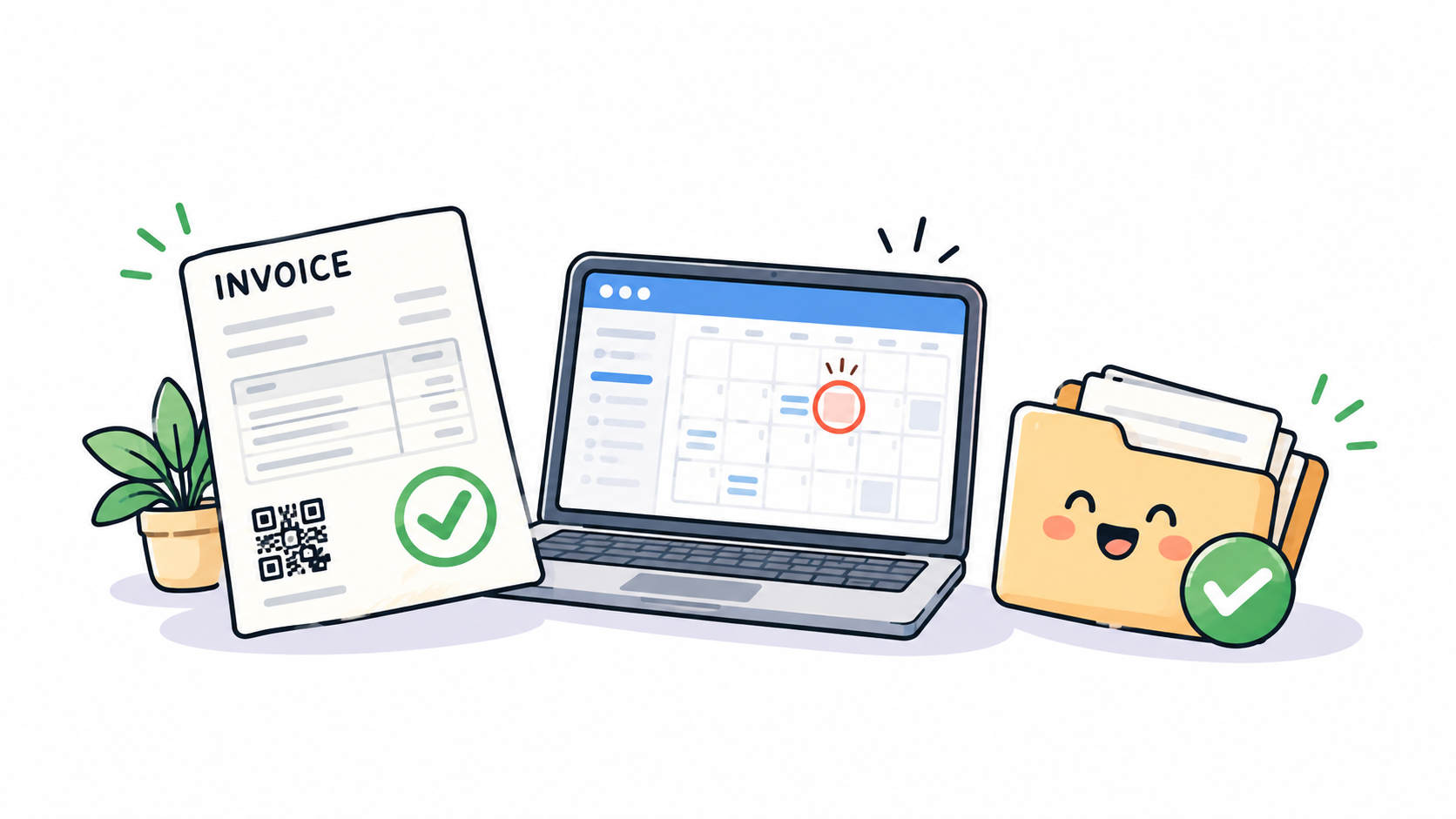
01Start with clean invoices
For many small businesses, GST filing isn't hard because of the tax. It's hard because the data arrives late, incomplete, or in five different places. Fixing this starts at the billing counter, not at filing time. Most return errors begin on the invoice itself.
A filing-ready invoice needs: 1) The customer's GSTIN (for B2B sales), 2) The correct HSN code and GST rate per item, 3) Place of supply so the right split between CGST/SGST and IGST is applied, and 4) A unique, sequential invoice number.
02Know whether e-invoicing applies to you
Businesses above the government's turnover threshold must generate an IRN (Invoice Reference Number) through the e-invoice portal for B2B sales.
The threshold has changed over the years, so check the current limit on the GST portal. If you're close to it, set up e-invoicing early rather than in a rush.
03A simple monthly routine
Daily: Bill through your POS so HSN and tax are filled automatically. Weekly: Review returns and credit notes, because these are the most common source of mismatches.
Before the due date: Generate the GSTR-1 report, check totals against your sales register, and fix any B2B entries missing a GSTIN. After filing: Reconcile with your purchase data before GSTR-3B.
04Common mistakes & The Takeaway
Watch out for wrong HSN codes on new items, backdated or deleted invoices, and credit notes not linked to the original bill.
Compliance is easiest when it's a by-product of billing. If your POS gives you filing-ready reports, you spend a few minutes reviewing, not days rebuilding. (Verify current thresholds and due dates with your CA before publishing.)